
Bicortical Mini-Implant with Two Anchorage Heads
Dr. Abdeen Shaker · Dr. Mohammad Bashar Muselmani · Dr. Yasser Rsheadat
Patent No. 5880
·
2012
·
Syrian Patent Office — Directorate of Intellectual Property and Industrial Protection
Background
Orthodontic mini-implants are widely used as temporary anchorage devices (TADs) to control tooth movement during orthodontic treatment. While monocortical mini-implants are the most common type in clinical use, bicortical mini-implants offer superior anchorage resistance, reduced stress on the cortical bone, and greater stability.
Existing two-part bicortical designs, however, have significant drawbacks: some allow force application from only one direction, while others use a narrow diameter and a smooth (non-threaded) intra-osseous segment that limits stability and can cause the implant to rotate under load.
The Invention
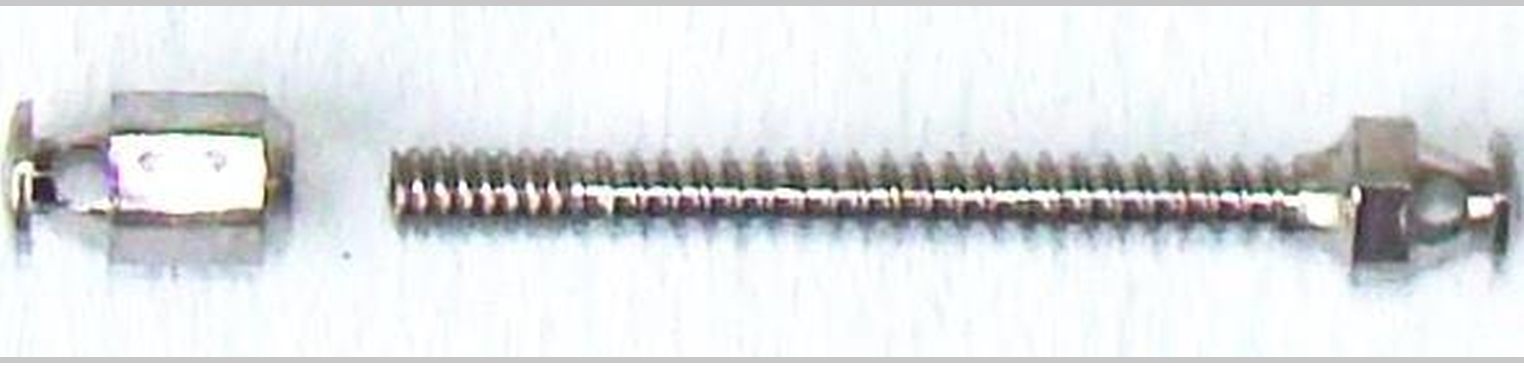
To overcome these limitations, the inventors developed and patented a new bicortical mini-implant with two independent anchorage heads. The device consists of two parts that connect outside the bone: a first part combining an anchorage head with a threaded intra-osseous segment (1.5 mm diameter, available in lengths of 9, 11, 13, and 15 mm) and a threaded extra-osseous segment (1.4 mm diameter, 3 mm long); and a second part forming the matching anchorage head. Both heads can be adapted with a hole, a rectangular slot, or a hook depending on the clinical need.
This design combines the stability of full-length threading through the bone with the flexibility and safety of two independent anchorage points, while avoiding the drawbacks of earlier bicortical systems.
Clinical Indications
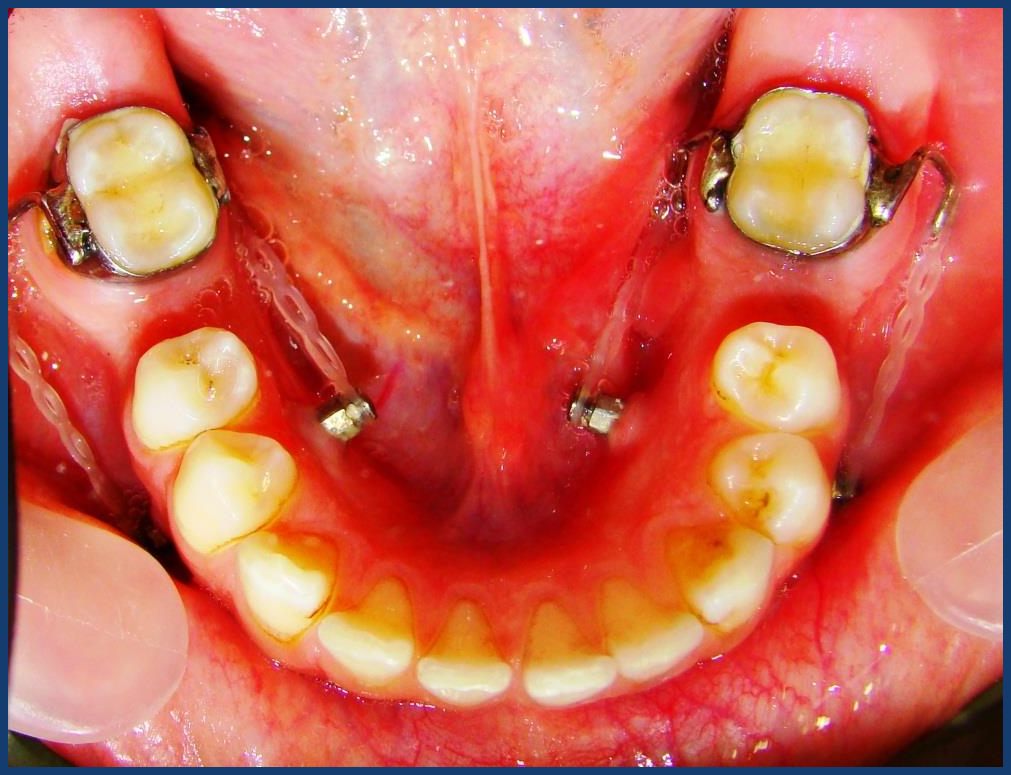
Intrusion of posterior teeth · Molar protraction · Retraction of anterior teeth

Questions about your own case?
Send a photo of your smile on WhatsApp and get an initial direction.
Book your consultation on WhatsApp